
Case study / Supplements Home Use Test Published
41 children, 28 days, four rounds of cognitive tests. All at home.
Activ’Inside wanted to know whether the cognitive effects of its grape and blueberry extract, documented in adults, would also show in school-aged children, in daily life rather than in a lab. We recruited the families, ran the fieldwork in Singapore homes and supervised safety. The study is now published.
- Client
- Activ’Inside, France
- Product
- Memophenol™, 150 mg a day, stick at breakfast
- Sample
- n = 41 analysed, 52 enrolled
- Profile
- Chinese children, 7 to 12, 21 girls and 20 boys
- Design
- Open-label real-world trial, medically supervised
- Duration
- 28 days, July to August 2025
The brief
Measure cognition in children, without a lab.
Singapore children live under heavy academic pressure, and many parents look for ways to support focus and memory. Activ’Inside had clinical data on Memophenol™ in adults. The question was whether benefits would also appear in children aged 7 to 12, taking the product as families really would.
- Real life: product at breakfast, tests on a tablet at home, no clinic visit.
- Acute and cumulative: a first measure two hours after the very first dose, then at 14 and 28 days.
- Two viewpoints: the child’s own test scores, and the parent’s view of daily behaviour.

What SYRES Singapore ran
670 children consulted, 41 complete data sets, four weeks of fieldwork.
Recruitment from our panel by online questionnaire and phone screening, balanced by age group and gender. Product delivered to each home. Every test round and questionnaire followed up family by family, with a medical assessor supervising the collection of adverse events.
- 670children aged 7 to 12 consulted through their families during recruitment
- 52enrolled after inclusion and exclusion criteria
- 41completed the protocol and were analysed
- BaselineCogniFit Kids session on a tablet, BRIEF-2 parent questionnaire, first dose at breakfast.
- Acute effectSecond CogniFit session two hours after the first dose, same morning.
- Mid-pointCogniFit session and BRIEF-2, compliance and tolerance check.
- Read-outCogniFit session, BRIEF-2, parent satisfaction survey, adverse event review.
Each CogniFit session: six mini-games, 15 to 20 minutes, supervised by a parent at home. BRIEF-2: validated 63-item questionnaire on executive function, English version.
What came back
Scores up from the first morning, and still climbing at Day 28.
Results as reported by Activ’Inside in the published paper, on the 41 children analysed.
Every follow-up differs significantly from baseline (p < 0.001). The largest single gains at Day 28: contextual memory +40.4%, working memory +36.6%, visual perception +34.2%.
Domain averages. Some individual skills did not move significantly, such as focused attention and hand-eye coordination.
A lower score means fewer difficulties reported. The global composite was already down 8.3% at Day 14. All changes significant (p < 0.01 or better).
Parents at Day 28
- Noticed better attention
- 63%
- Found it effective overall
- 66%
- Would continue or buy
- 61%
Tolerance
- Overall tolerability
- 97.6%
- Adverse events, all mild
- 1
One transient stomach ache on the first day, resolved without treatment.
Compliance
- Never missed a dose
- 80.5%
- Missed one or two
- 19.5%
Of the 41 children analysed: 33 never missed a dose, 8 missed one or two. Eleven of the 52 enrolled were excluded during the study for not following instructions.
Analyzing the data
Two independent measures, one clear trajectory.
The children’s cognitive scores improved from the first morning and continued to rise through Day 28. Concurrently, parents completing a separate validated questionnaire reported fewer daily difficulties across those same weeks. Product tolerance was nearly flawless.
Such strong results rely on a robust protocol designed for real-world home environments. Over the summer holidays, 41 families completed four tablet-based testing rounds; eight in ten children never missed a dose, and every reported event was carefully reviewed by a medical assessor. This generated data clean enough to achieve formal publication within just seven months.
For any brand, this is exactly what an initial home study should deliver: actionable insights, alongside reliable recruitment, compliance, and tolerance metrics to confidently plan the next phase, including a placebo arm with blinded kits when the time comes.
What the study enabled
From fieldwork to a published paper in seven months.
- A paper in the Journal of Nutrition & HealthFieldwork in July and August 2025, paper published in March 2026, open access.
- First data in children, in their target marketAcute and 28-day results on a population the adult studies did not cover.
- A protocol ready to scaleRecruitment rates, compliance and tolerance known: the basis for sizing a controlled trial.
More case studies
Other studies we can show you.
-
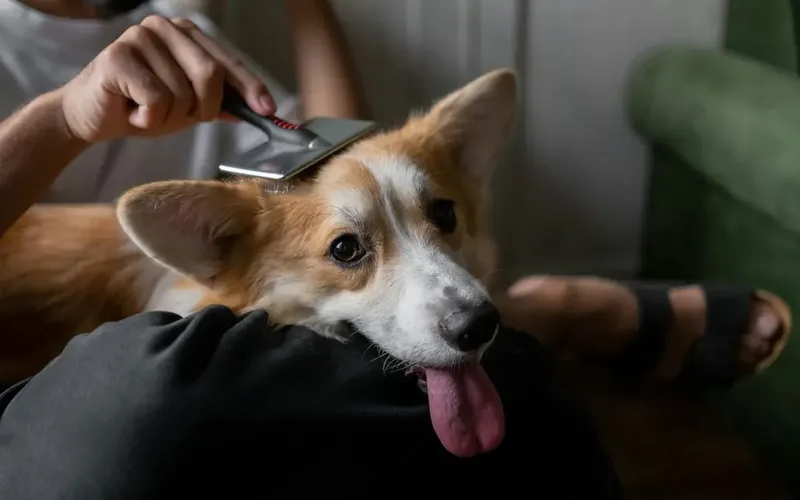
A cleansing lotion for dogs, before launch
Eyes, ears and skin folds: efficacy, acceptance by the dog and switching potential, measured with owners at home over three weeks.
- Sample
- n = 34
- Duration
- 21 days
- Overall
- 8.3/10
-
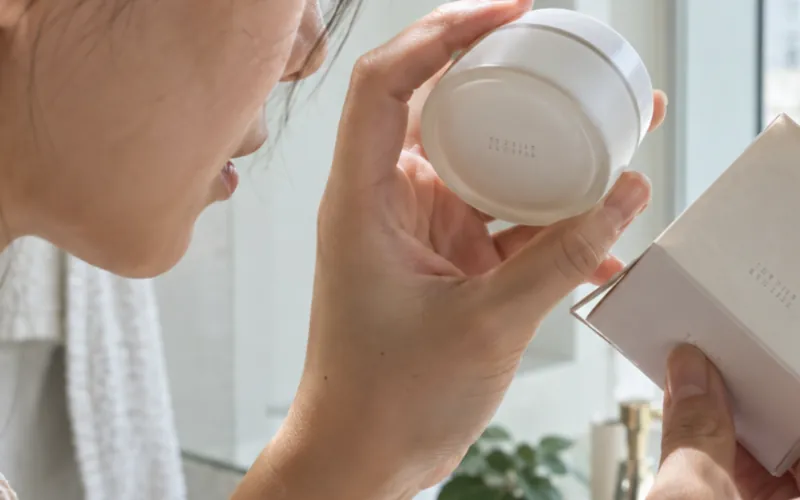
A lightening night cream, before launch
Efficacy, cosmetic qualities and tolerance measured in one monadic home use test, read against our Singapore database.
- Sample
- n = 54
- Duration
- 30 days
- Satisfied
- 87%
-
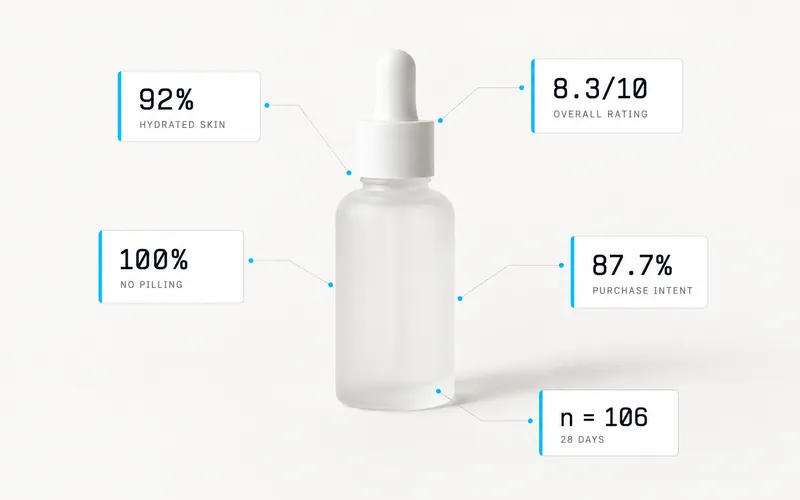
Sample report: a face serum in use
A real, anonymised read-out, page by page: profile of testers, perceived efficacy, significance of every claim, tolerance.
- Sample
- n = 106
- Duration
- 28 days
- Overall
- 8.3/10
Your product
Testing a supplement, or testing with children?
Families profiled by children’s age, home test rounds, parent questionnaires, medical follow-up. Send us the brief and we will propose a design within 24 hours.
- Home use test
- Children and parents
- Supplements
- Medical supervision
- Digital cognitive tests
- Validated questionnaires
Got something on the bench?
Send us the brief today. You’ll have a design, a sample size and a price back within 24 hours.