
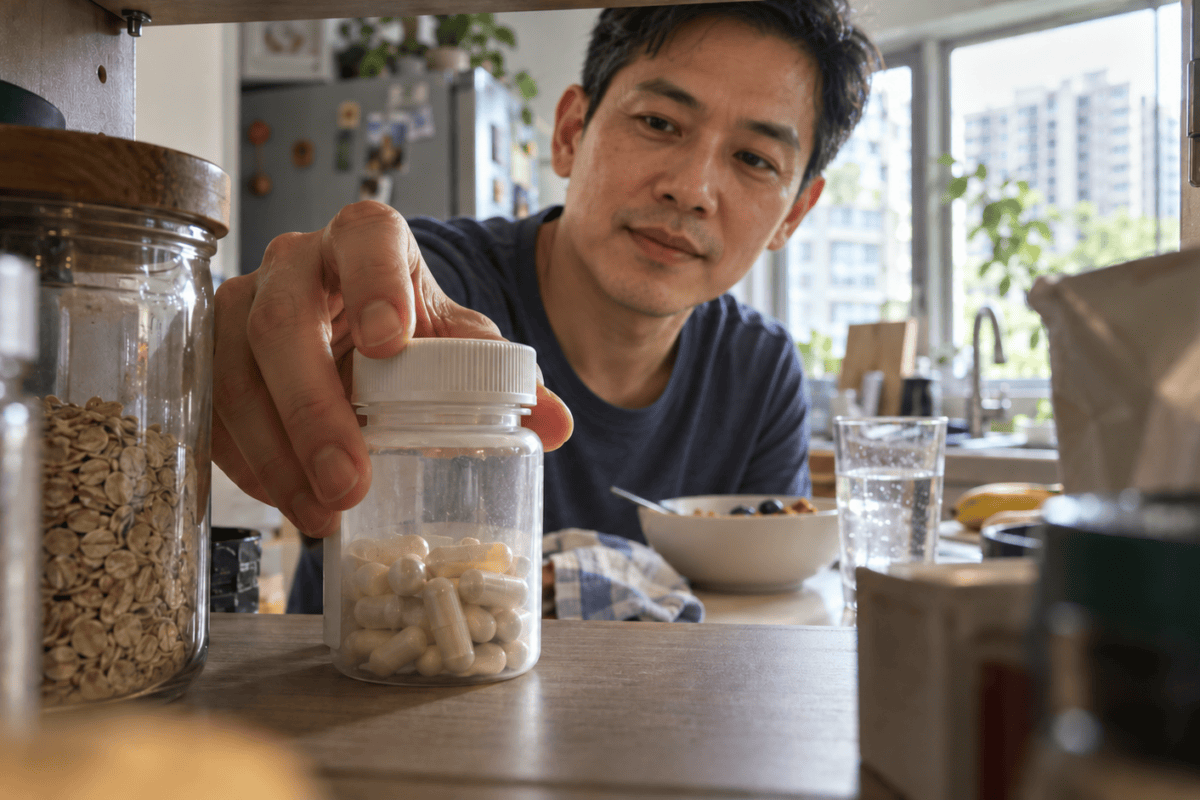
Supplement use is well established among the members of our Singapore panel who responded to the survey. Yet high adoption does not automatically create long-term loyalty. Consumers need a credible reason to start, a routine they can maintain and a benefit they can recognise.
At a glance
- 71% currently take supplements regularly or occasionally.
- 70% of current users want to improve their general wellbeing.
- 60% of former users stopped because they noticed no benefit.
- 31% of never-users are concerned about side effects or interactions.
Supplements already have a place in everyday routines
Among respondents, 71% currently take supplements, 16% have used them in the past and 14% have never done so.
Current users commonly combine several categories:
- vitamins or minerals: 63%;
- omega-3 or fish oil: 50%;
- digestive products, probiotics or prebiotics: 35%;
- multivitamins or general-wellbeing products: 34%;
- bone-health products: 26%;
- supplements for skin, hair or nails: 24%.
This is not a market built around one isolated need. Respondents use supplements across prevention, maintenance and appearance-related benefits, often as part of a wider wellbeing routine.
The journey is largely consumer-led
The strongest motivations among current users are:
- improving general wellbeing: 70%;
- preventing a future problem: 47%;
- supporting healthy ageing: 43%.
Only 10% mention a recommendation from a healthcare professional, while 10% refer to a diagnosis or health assessment. Consumers are therefore making many decisions themselves, navigating a large category with varying benefits, formats and levels of evidence.
Brands need to make that decision easier. Clear positioning should explain who the product is for, what the consumer may reasonably notice and how the product fits into daily life.
Retention fails when the benefit is not visible
Former users identify three leading reasons for stopping:
- they did not notice any benefit: 60%;
- the products were too expensive: 33%;
- they forgot to take them too often: 29%.
This shifts the challenge beyond acquisition. A product may win an initial purchase through its promise, but continued use depends on the experience that follows.
Longitudinal home-use research can help brands identify when consumers expect progress, what they actually notice and where adherence begins to decline. It can also reveal whether the language used in communication matches the way consumers describe their experience.
Never-users face a confidence problem
People who have never used supplements mention several barriers:
- concerns about side effects or interactions: 31%;
- uncertainty about which product to choose: 29%;
- no perceived need: 27%;
- no recommendation from a healthcare professional: 24%;
- never having considered the category: 20%.
These responses suggest hesitation rather than uniform rejection. Safety, product navigation and relevance all need to be addressed before a non-user can confidently enter the category.
Future interest remains broad and prevention-led
For the next twelve months, the leading areas of interest are general wellbeing at 36%, healthy ageing at 33%, bone health and immunity at 23% each, skin, hair or nails at 21%, and energy or fatigue at 19%.
The opportunity is therefore not limited to highly specialised propositions. Broad but well-defined wellbeing benefits can remain compelling when they are supported by a credible product experience.
What this means for supplement brands
Three research questions deserve particular attention:
- Is the benefit noticeable? Understand what progress means to consumers and when they expect to feel it.
- Can the routine be maintained? Explore format, frequency, convenience and the causes of missed use.
- Does the claim create confidence? Test comprehension, credibility and relevance before launch.
SYRES Singapore combines local panel access with experience in home-use testing and consumer research. We help supplement brands refine concepts, understand adherence and build evidence grounded in the realities of the local market.
Planning a supplement study in Singapore? Contact the SYRES Singapore team to design a research approach around your product, target consumers and communication objectives.
Read our companion article on what Singapore pet owners buy, miss and are willing to test at home.
Methodology note: this survey was conducted among members of the SYRES Singapore panel. Percentages use the respondents eligible for each question as their base. Multiple-response questions may total more than 100%. The findings describe participating panel members and are not presented as representative estimates for the whole Singapore population.
Keep reading