An active ingredient can be scientifically excellent. One question remains: excellent for whom?
For R&D, excellence is proven through mechanisms of action, in vitro studies and in vivo clinical data. That is the indispensable foundation. For a brand, however, the stakes lie elsewhere. The question becomes: “What can I say about it to my customers? And above all, is the difference actually perceived?”
At SYRES we do not set scientific proof against consumer testing. We work on their continuity.
Take a deodorant: we run a half-body protocol (active versus placebo) with an expert sniff evaluation and a self-assessment at T0, T12h and T24h. We do not only measure a technical gap; we measure the gap people feel. Same logic for an anti-dark-spot treatment: two homogeneous groups over 56 days, and statistical analysis validates the difference.
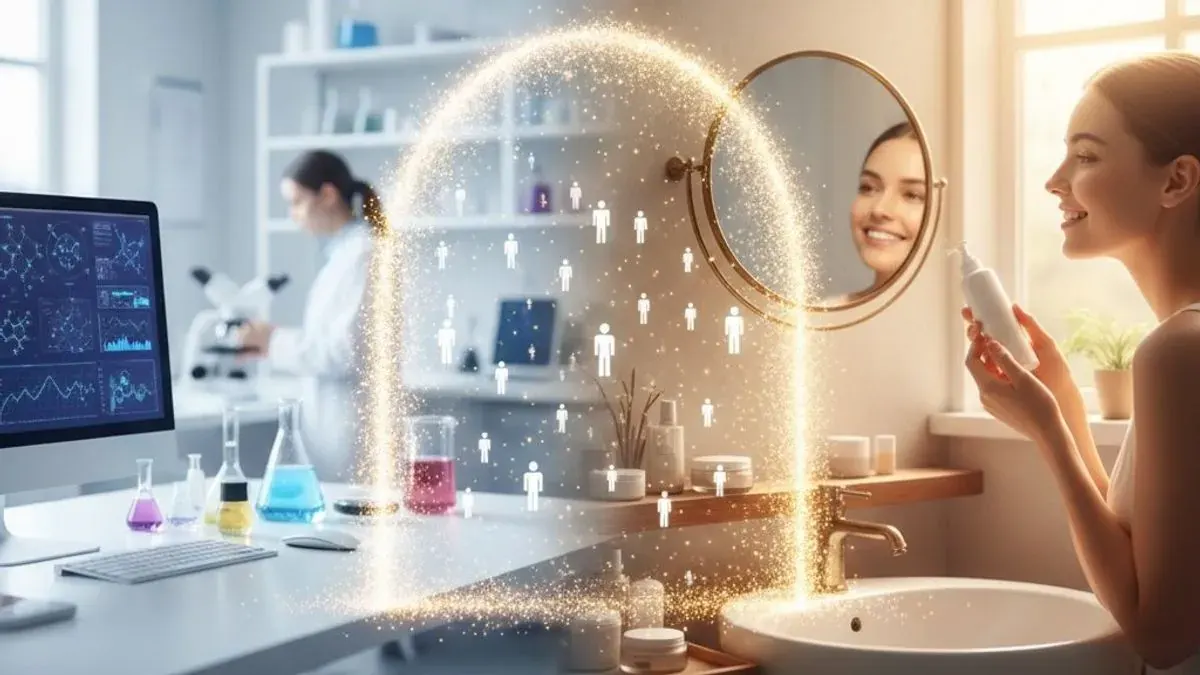
A manufacturer who brings only technical data stays inside a purely scientific conversation. To move up a gear and become a strategic partner for brands, it has to offer more. Supplying an active together with a comparative active-versus-placebo study, statistically significant perception results and directly usable consumer verbatims is offering a genuine turnkey marketing package.
Instrumental performance reassures R&D. Consumer validation reassures the brand. When the two converge, the active becomes a commercial weapon.
By reconciling these two worlds, you no longer sell a molecule: you sell a launch that has already been de-risked.
There is still time to make the case for your active. Short-kinetics studies can be set up so that you arrive at your next trade show with hard-hitting perception evidence. Get in touch to discuss your consumer studies.
Originally published in French by SYRES France on 24 February 2026: read the original article.
Keep reading