
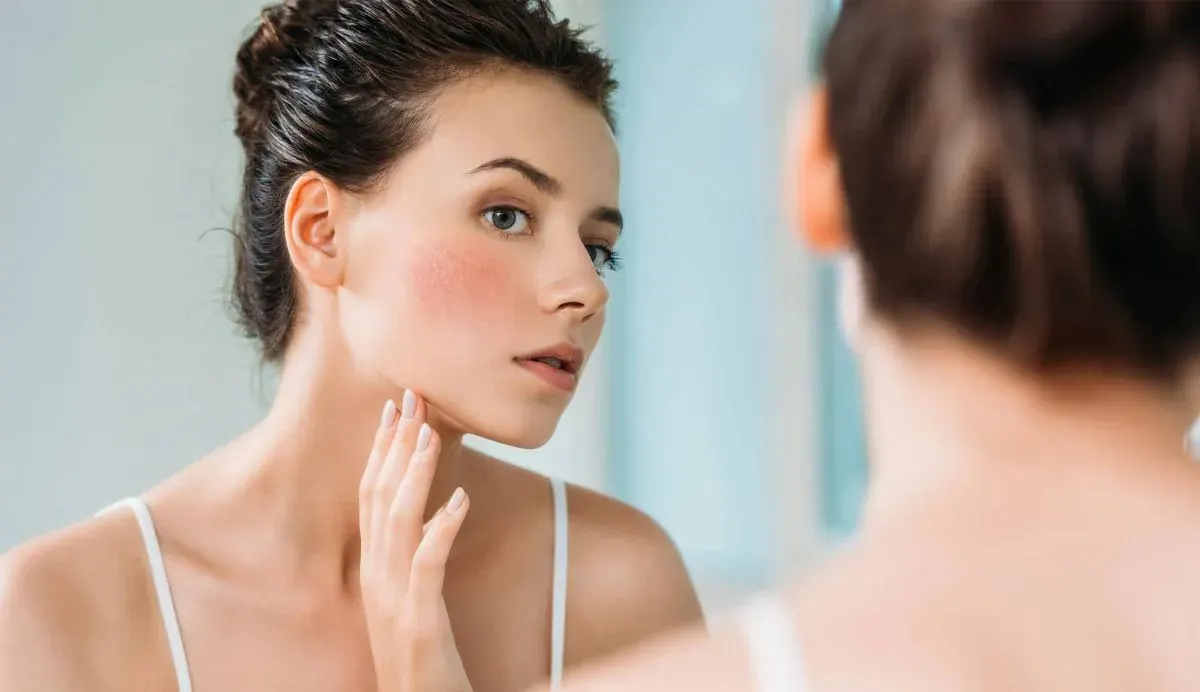
Tight skin, redness, discomfort… “Sensitive skin” has become a major subject in cosmetics. At SYRES we analysed ten years of data from our French panel of more than 20,000 participants to better understand the characteristics of skin sensitivity. The results reveal clear, sometimes unexpected trends that show how brands can design genuinely suitable products.
Almost one in two
Using the ARPP definition (recent and frequent perception of skin signs or discomfort), 44.8% of panellists report sensitive facial skin. Contrary to received ideas, no significant difference appears between men and women. Skin sensitivity is therefore not a question of gender but rather of skin type and age: dry skin is markedly more prone to sensitivity, and older people, particularly women over 50, report it more often.
What they feel
Panellists who describe themselves as sensitive mention 3.7 different signs or discomforts on average. The most frequent is tightness, felt by 82.7% of those concerned. Other sensations such as itching, tingling or heat also appear, reflecting a genuine everyday nuisance.
It increases with age
Younger people seem slightly less sensitive, but the trend reverses with time. Natural skin ageing, a weakening skin barrier and repeated exposure to external aggressions (pollution, climate variations, irritant products) may explain this evolution. The most affected profile: women over 50 with dry to normal-dry skin, a key population for brands offering soothing, protective, skin-respecting products that reinforce the barrier.
From statistics to product development
These results are not just a snapshot; they concretely guide product development. With these analyses our partners can identify sensitive consumer segments within the population, design targeted formulas that are truly effective and well tolerated, and support their “sensitive skin” claims with solid, representative data. This longitudinal approach ensures that every product we evaluate answers real consumer needs, whatever the skin type or age.
Nearly one consumer in two considers their skin sensitive. Behind that figure lies a complex reality where science, listening and respect for what consumers feel must go hand in hand. By studying these perceptions over time, we contribute to cosmetics that are fairer, more precise and more human.
Originally published in French by SYRES France on 28 October 2025: read the original article.
Keep reading