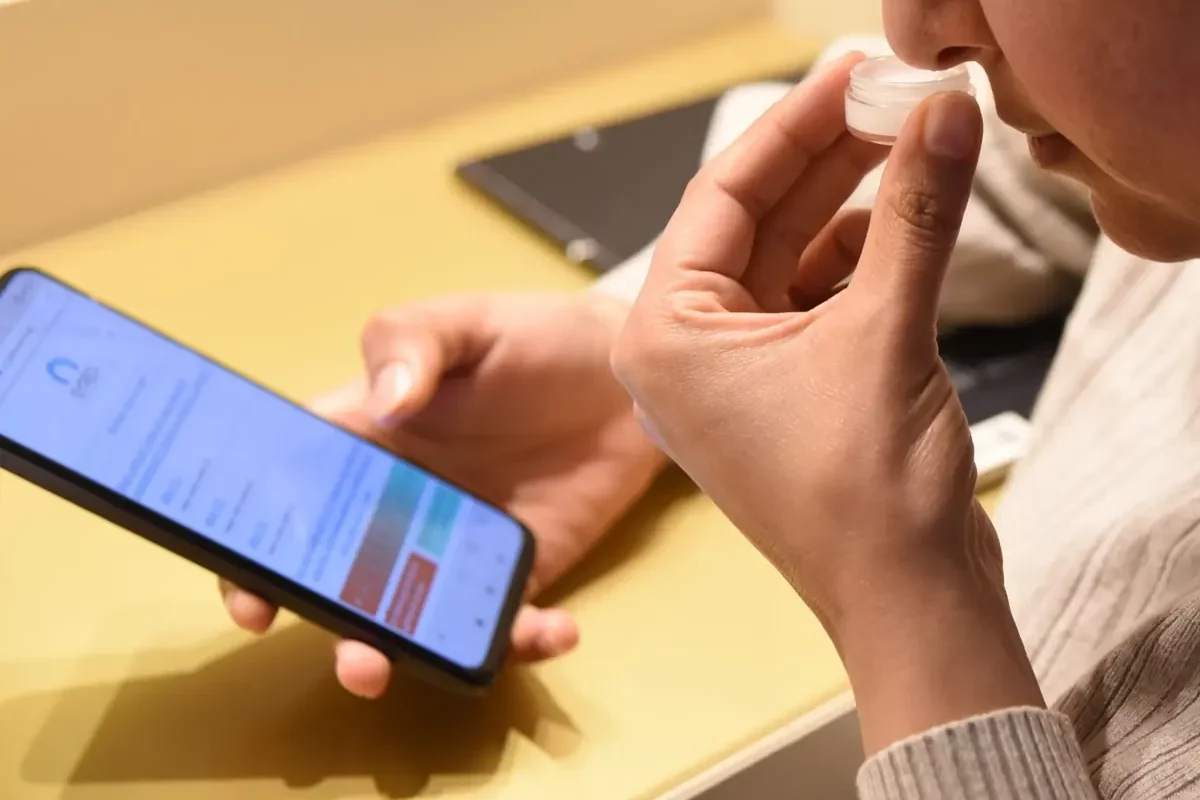
The gesture seems simple: breathe in a perfume, discover a fragrance, evaluate a smell. Yet in sensory analysis, having people smell a product is far from trivial. To obtain usable, representative data, a sniff test cannot be improvised. It rests on a precisely calibrated protocol where every detail counts. Here are the pillars that guarantee the reliability of your results.
1. The panel: a human measuring instrument
Everything starts with the choice of participants. A good panellist must be in optimal physical condition. Beyond availability and concentration, we check for genuine olfactory ability:
- Zero obstacles: no cold, no seasonal allergies and, of course, no anosmia.
- Acuity: the panellist must be able to perceive nuances without physical bias.
2. Managing olfactory fatigue
The nose is a sensitive tool that saturates quickly. To keep perceptions sharp, we impose strict limits:
- The golden number: no more than six products per session. Beyond that, olfactory fatigue distorts judgement.
- Randomisation: the order of presentation is always random, to avoid contrast or primacy effects.
- Total anonymity: each sample is identified by a random three-digit code, eliminating any prejudice linked to packaging or brand.
3. The “reset” protocol
Between two products it is crucial to return to a neutral point. We apply a rigorous sensory cleaning protocol:
- Skin cleaning: hands washed with neutral soap if the product was applied to the skin.
- Olfactory neutralisation: a pause of about five minutes, with a simple but effective technique such as breathing the neutral smell of one’s own sleeve to reset the nose.
4. A controlled environment
The test must take place in a sensory “void”. The room must be perfectly neutral: no trace of coffee, room fragrance or stray odours that could interfere with the tested product.
5. Spontaneity in the service of precision
Olfactory memory is extremely volatile. That is why we ask panellists to record their impressions immediately. With a clear, structured questionnaire we capture the accurate perception at the very moment it arises, before memory or reflection alters it.
The last word
These methodological precautions may seem excessive to a newcomer. In reality, they are the boundary between a mere subjective impression and solid scientific data. At SYRES we are convinced that this invisible rigour is what makes the difference to the success of your projects.
Originally published in French by SYRES France on 24 April 2026: read the original article.
Keep reading